Program Leadership

Lori DiPrete Brown
Program Director
Lori has spearheaded innovative education and community engagement programs to advance quality of life and equity during her tenure at UW–Madison. Her teaching in both the School of Human Ecology and the School of Medicine and Public Health is informed by 15 years of global health practice in 21 countries, and spans public health, human rights, civil society, community studies, quality improvement and innovation. Her work related to change-making with UCA focuses on advancing sustainability in urban-centered systems within the framework of the Sustainable Development Goals. She is the Founding Director of UW’s 4W Women and Wellbeing Initiative and also served as an Associate Director of the Global Health Institute from 2010–2022. Her scholarship includes over 40 articles and reports, lectures at universities and conferences around the world, and a textbook entitled Foundations in Global Health Practice (Wiley, 2018). DiPrete Brown is a returned Peace Corps Volunteer (Honduras), and holds degrees from Yale College, the Harvard School of Public Health, and the Harvard Divinity School.
Lori serves as the primary contact for the SDG 360 Thinking initiative and can be reached at dipretebrown@wisc.edu.

Nicole Weber
Curriculum and Outreach Lead
Nicole is a PhD student in the Environment and Resources program at UW–Madison with 15 years of experience in global health, specializing in environmental health, behavior change, humanitarian response, and capacity strengthening. She holds master’s degrees in public health and humanitarian aid and has worked internationally and in the U.S. with organizations such as Save the Children, CDC, and The Carter Center. Her work in emergency and resilience settings has supported the Sustainable Development Goals (SDGs), particularly SDG 2 (Zero Hunger), SDG 6 (Clean Water and Sanitation), and SDG 3 (Good Health and Well-Being). She is also an affiliate faculty member at the Dornsife School of Public Health at Drexel University.

Shiqi Shen
Curriculum and Outreach Lead
Shiqi is a PhD candidate in Civil Society and Community Research at UW–Madison with a decade of experience in China’s civil society sector, focusing on capacity building in rural areas, rural-urban education equity, and youth and women’s empowerment. In collaboration with Lori DiPrete Brown, she co-leads the adaptation and dissemination of Chinese-language SDG 360 Thinking tools to promote more inclusive and justice-centered sustainability education. She holds an MA in Sustainable International Development from Brandeis University and a BA in Accounting and Finance from Xi’an Jiaotong-Liverpool University and the University of Liverpool.

Yuuta “Ethan” Tomooka
Japan Outreach and Implementation Lead
Ethan is a senior pursuing a degree in Computer Science at the University of Wisconsin–Madison, with certificates in Science Communication and Entrepreneurship. He serves as the Japan Outreach & Implementation Lead for SDG 360 Thinking, focusing on adapting and translating the framework for use in Japan and building partnerships with local governments, universities, and regional organizations. His interests include connecting emerging technologies, policy, and institutional decision-making to strengthen public-sector implementation and address complex social challenges. As part of the SDG 360 Thinking team, he contributes to outreach strategy, Japanese translation, methodology localization, and the development of pilot initiatives in Japan.
Team of Scholars

Kaiping Chen
Kaiping is an Associate Professor of Computational Communication in the Department of Life Sciences Communication at UW–Madison, with affiliations across political science, data science, environmental studies, and international area studies. Her research explores how digital technologies and deliberative designs shape public discourse, political accountability, and civic engagement. Using computational and qualitative methods, she studies public deliberation and misinformation across diverse settings, including the U.S., China, and Ghana. Her work has been published in leading journals such as PNAS, American Political Science Review, and Journal of Communication. Committed to bridging research and practice, she collaborates with local governments to promote inclusive dialogue on issues like food security, public health, and the environment. Kaiping serves in elected leadership roles in ICA and AEJMC, and her research has been supported by the NSF, NIH, and Chan Zuckerberg Initiative. She holds a PhD from Stanford and an MPA from Columbia University.

Emma Contreras
Emma is an undergraduate at the University of Wisconsin–Madison, pursuing a dual degree in Educational Policy Studies and Environmental Studies through the School of Education. As a student intern with the SDG 360 Thinking Team, she brings strong bilingual proficiency in Spanish to advance the project’s global equity mission. Emma supports the Spanish translation of SDGs content and contributes to the development of localized examples from Latin America, helping to expand the tool’s cultural relevance and accessibility for diverse communities.

Kyle Cranmer
Kyle is the David R. Anderson Director of the Data Science Institute at UW–Madison, where he leads campus-wide efforts to advance ethical, inclusive, and use-inspired data science in service of society. With a background in experimental particle physics, Cranmer played a pivotal role in the discovery of the Higgs boson at CERN. His work now spans disciplines, from climate and agricultural sustainability to public health and equity. Cranmer is committed to building partnerships across research domains and with communities, drawing on the Wisconsin Idea to translate data science into public good. Prior to UW, he was a Professor of Physics and Data Science at NYU and Executive Director of the Moore-Sloan Data Science Environment. He is a Fellow of the American Physical Society and Editor in Chief of Machine Learning: Science and Technology.
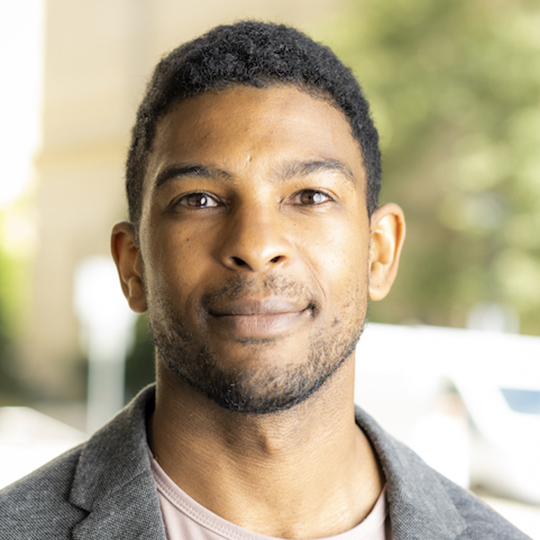
Corey Jackson
Corey is an Assistant Professor at the Information School at UW–Madison and a faculty affiliate of the Data Science Institute, Holtz Center for Science & Technology Studies, and Institute for Diversity Science. His research lies at the intersection of human-computer interaction, computer-supported cooperative work, and citizen science. Using mixed methods and participatory design, Corey investigates how digital tools can promote inclusive collaboration and civic engagement, particularly in environmental and policy contexts. He co-leads projects that amplify Black and Latine voices in environmental policymaking and design deliberative platforms to address algorithmic bias and climate justice. A first-generation scholar with deep commitments to equity, he designs systems that engage marginalized communities in shaping data practices and public knowledge. His work is funded by the National Science Foundation, the Chan Zuckerberg Initiative, and the Rockefeller Foundation, and has been published in leading HCI and social computing venues.

Esther Kang
Esther is an Assistant Professor of Design Studies at UW–Madison whose research explores the evolving role of design in civic infrastructure, governance, and sustainability transitions. With over 12 years of experience as a civic design strategist, she examines how design intersects with policy, urban development, and accountability systems, particularly in historically marginalized communities. Her interdisciplinary work bridges design studies, urban humanities, and science and technology studies, with current projects focused on the Right to Repair Act’s implications for agriculture and urban redevelopment in eastern Wisconsin. Kang’s practice-informed scholarship centers equity, community-driven innovation, and design justice. Former collaborators include the Vera Institute of Justice, New Jersey Office of Innovation, and Bloomberg Philanthropies’ What Works Cities. She is affiliated with the Holtz Center for Science & Technology Studies and the Center for Community and Nonprofit Studies. Kang holds a PhD in Design from Carnegie Mellon University and an MA in Social Design from MICA.

Garrett Smith
Garrett is a software developer at UW–Madison’s Division of Information Technology (DoIT), where he leads the development of custom platforms that support research, teaching, and public engagement. With a master’s in computer science and a PhD in educational psychology, he brings a unique learning sciences perspective to educational and civic technology. Garrett is the lead developer of the SDG 360 Thinking web-based tool, created in collaboration with the School of Human Ecology and the Data Science Institute.